Originally published: July 13, 2026
America’s EV mandate is not dead, thanks to 4 “waivers” that California holds from the Clean Air Act, which let it impose vehicle GHG standards on the whole country.
Congress has an opportunity to get rid of these waivers, but they need to act before the midterm election!1
-
No government should use vehicle GHG standards to mandate EVs.
-
There is no “climate crisis” requiring lower GHG emissions—and even if there were, forced EVs (which have high-emissions supply chains) wouldn’t help
-
People should be free to drive whatever vehicle they choose2
-
-
As of February 12, 2026, America no longer has national vehicle GHG standards.
But letting states set their own vehicle GHG standards effectively creates national standards, because automakers must shift their nationwide fleets toward EVs to comply with individual states’ rules.3
-
The Clean Air Act normally bars states from having vehicle GHG standards. But EPA gave CA “waivers” to set its own standards, which other states are allowed to adopt.
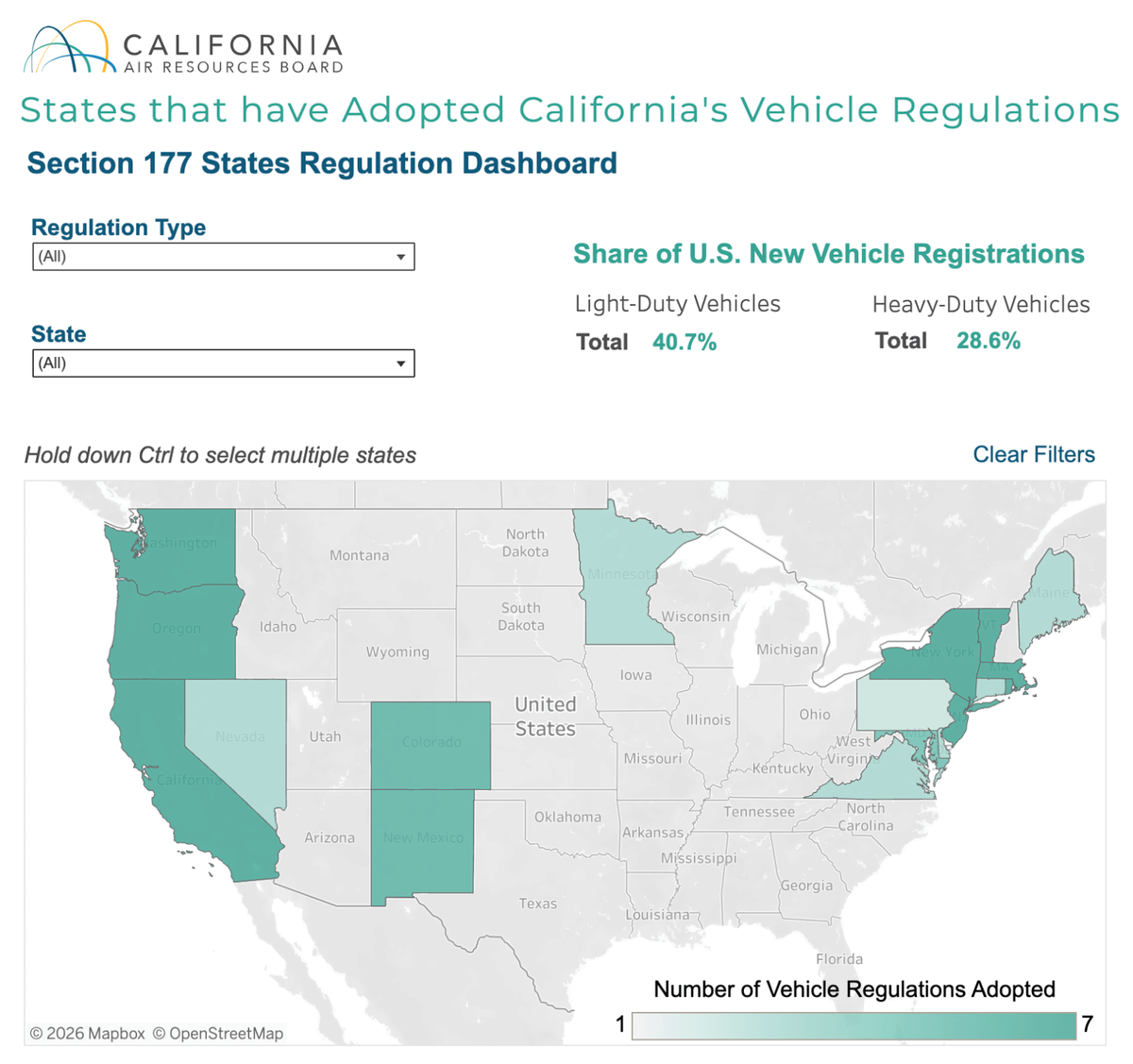
Today, more than a dozen states have adopted parts of CA’s standards, covering ~40% of the US new car market.4
-
Congress can put an end to California’s vehicle GHG standards using a law called the Congressional Review Act (CRA). It allows Congress to disapprove agency rules by issuing a “joint resolution” that is not subject to the ordinary 60-vote filibuster.5
-
The EPA could theoretically rescind California’s “waivers” on its own. But it would be far better for Congress to do so, because once Congress disapproves a rule under the CRA, a future EPA cannot reissue a substantially similar rule without new legislation.6
Here are the 4 California “waivers” Congress should put an end to, and how each one imposes an EV mandate on Americans:
-
1: Waiver for California’s GHG Emission Standards for New Motor Vehicles
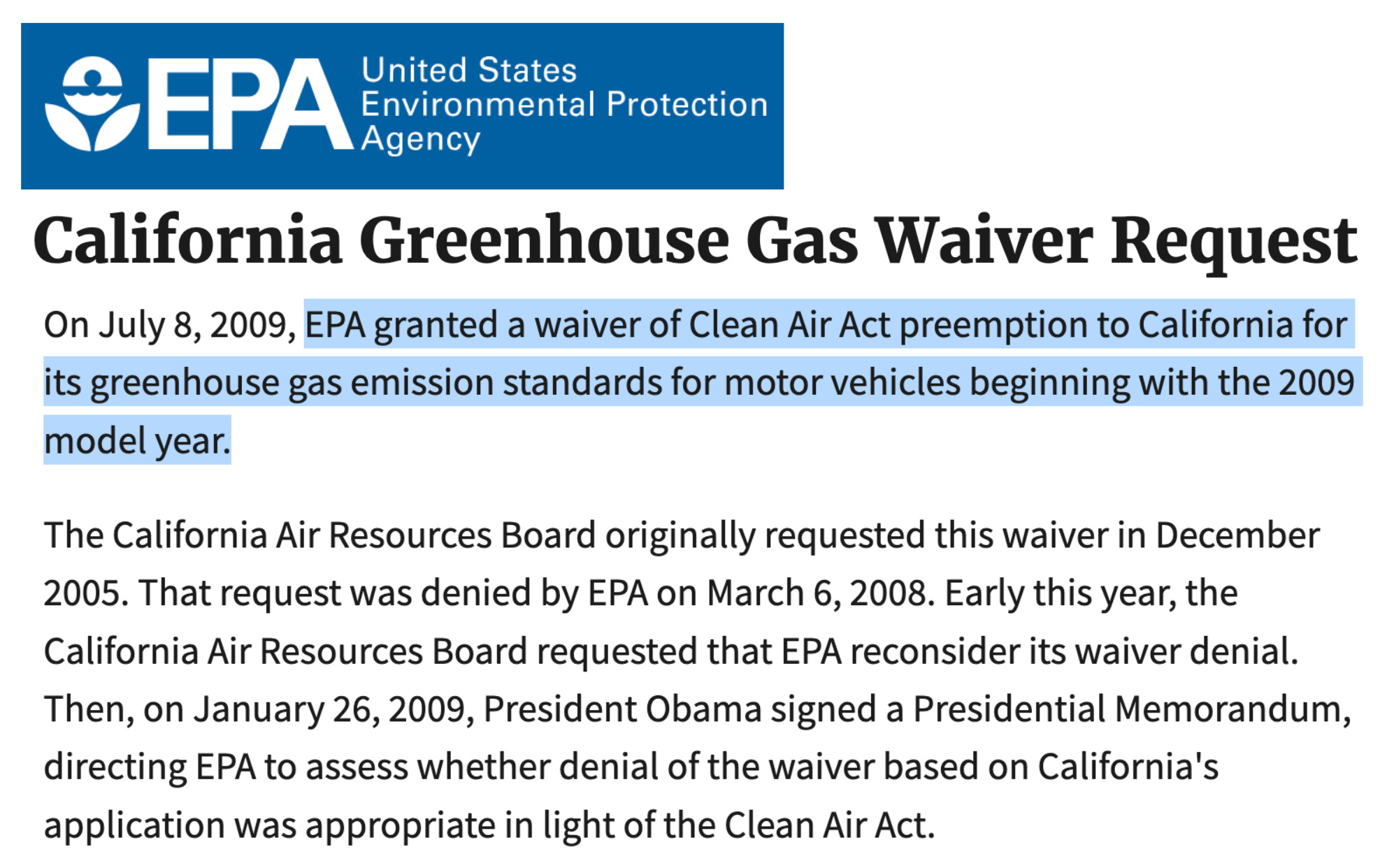
This waiver let CA enact vehicle GHG standards in 2009, before federal standards for model year 2012 went into effect, and *today it lets CA enforce the Biden admin’s EV mandate even after its repeal.**7
-
2: Waiver for California’s Advanced Clean Car (ACC I) Program
This waiver gives CA permission to
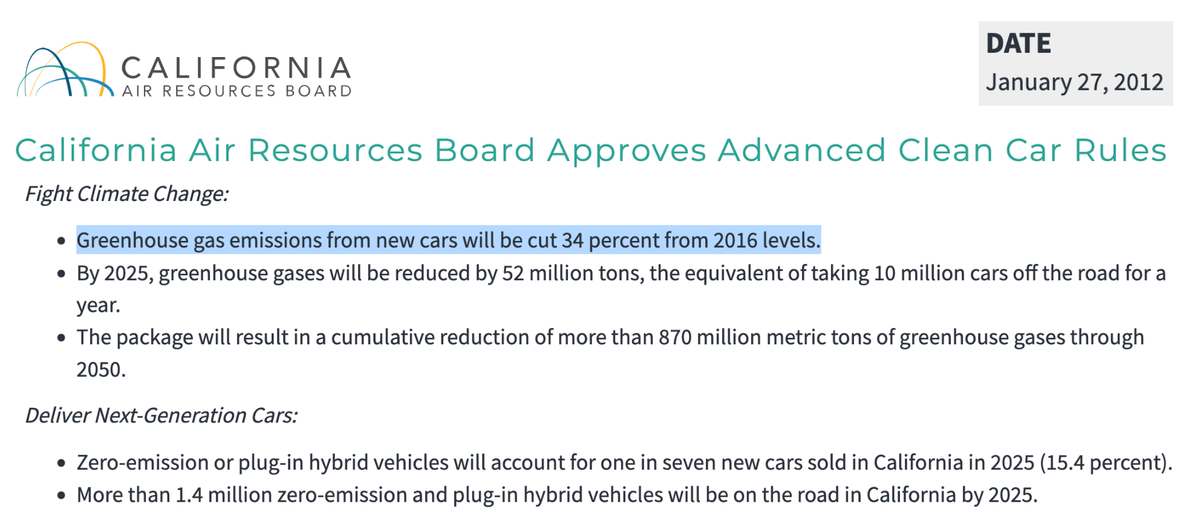
- effectively require automakers to sell ~15% EVs/hybrids or buy expensive credits
- enforce GHG standards for model years 2017-2025 as strict or stricter than federal standards8
-
3: Reinstatement of the Waiver for California’s Advanced Clean Car (ACC I) Program
The first Trump admin already withdrew the key parts of CA’s ACC I waiver, but the Biden admin reinstated the waiver in 2022. Congress should repeal both the original waiver and its reinstatement.9
-
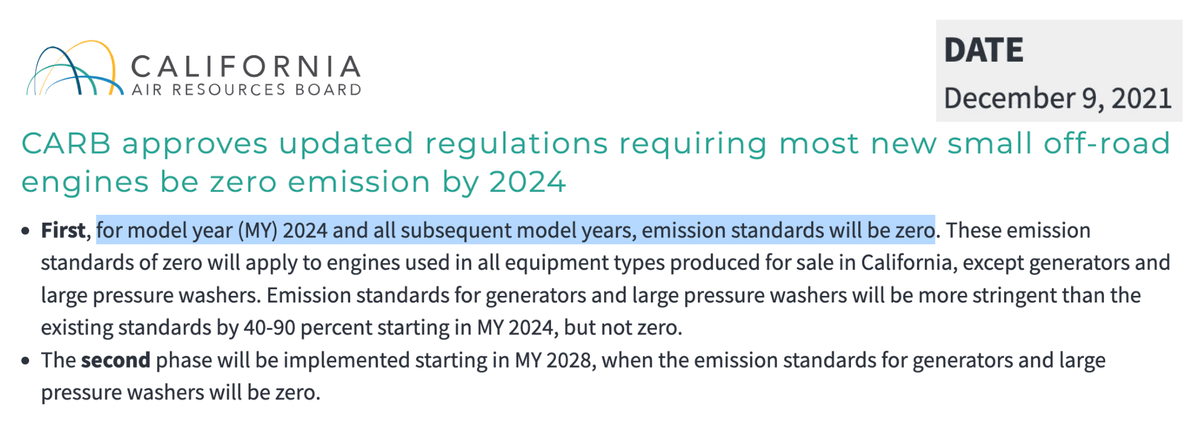
4: California’s Small Off-Road Engine (SORE) Authorization
This authorization gives CA permission to require zero exhaust emissions for small off-road engines, including lawn/garden equipment, beginning with model year 2024—plus later on, certain generators and pressure washers.10
-
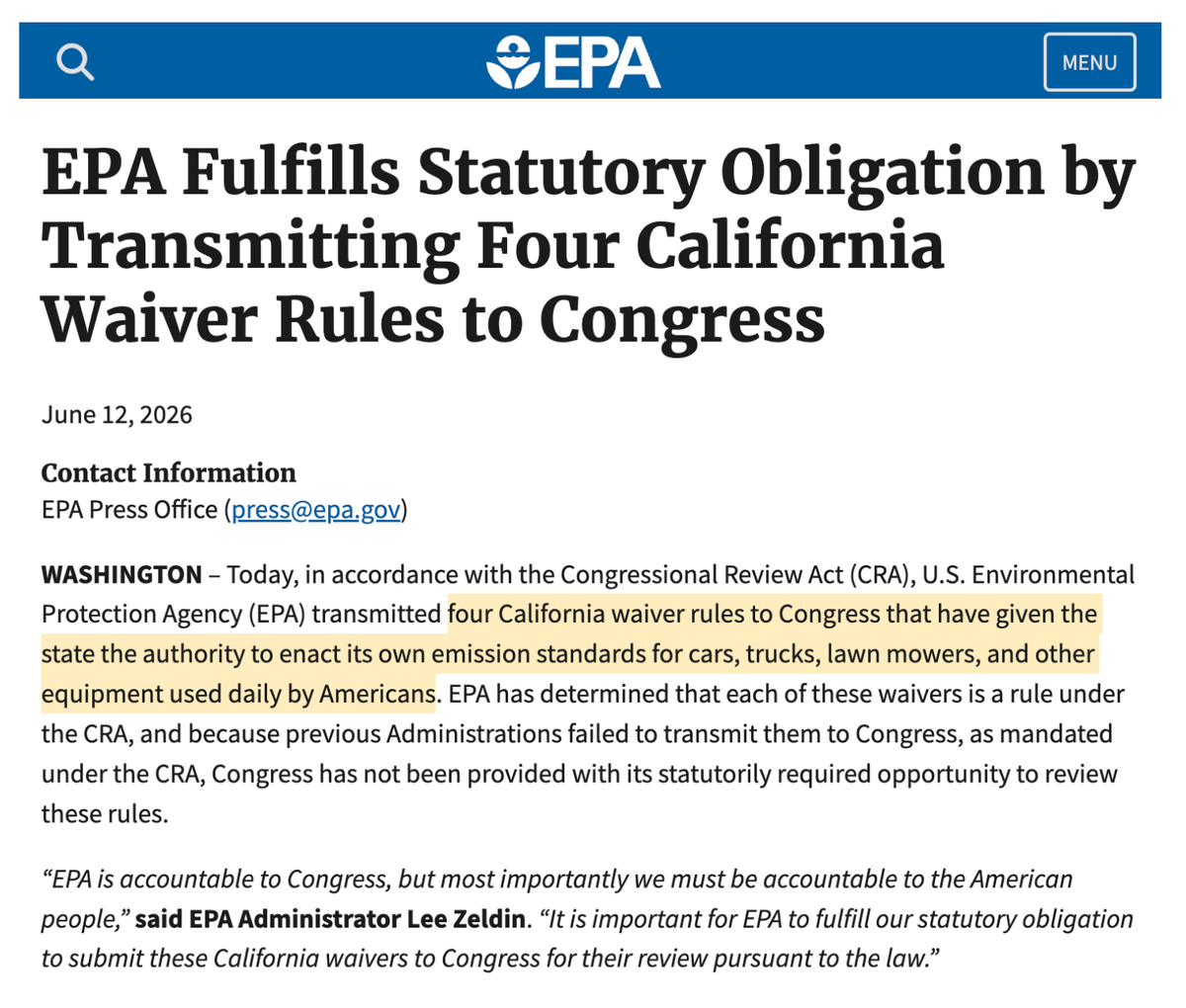
EPA has already submitted the 4 CA “waivers” to Congress for review under the Congressional Review Act.
Congress has until around December 10 to respond, but strategically Congressional leadership should act before the midterm election so they have control over it.11
-
Tell your Congressman to introduce and pass “joint resolutions” rejecting each California “waiver,” and to do it before the end of the 119th Congress.
If they don’t, an EV mandate from California will continue to dictate what kinds of cars all Americans are allowed to drive!
Michelle Hung, Steffen Henne, and Daniil Gorbatenko contributed to this piece.
References
-
U.S. Environmental Protection Agency - EPA Fulfills Statutory Obligation by Transmitting Four California Waiver Rules to Congress↩
-
Reuters - Trump administration takes aim at Biden electric vehicle rules↩
-
California Air Resources Board - States that have Adopted California’s Vehicle Regulations↩
-
Congressional Research Service - The Congressional Review Act (CRA): Frequently Asked Questions↩
-
“A rule that does not take effect (or does not continue) under paragraph (1) may not be reissued in substantially the same form, and a new rule that is substantially the same as such a rule may not be issued, unless the reissued or new rule is specifically authorized by a law enacted after the date of the joint resolution disapproving the original rule.”
Cornell Law School, Legal Information Institute - 5 U.S. Code § 801(b)(2)↩ -
U.S. Environmental Protection Agency - California Greenhouse Gas Waiver Request↩
-
California Air Resources Board - California Air Resources Board Approves Advanced Clean Car Rules↩
-
Federal Register - California State Motor Vehicle Pollution Control Standards; Advanced Clean Car Program; Reconsideration of a Previous Withdrawal of a Waiver of Preemption; Notice of Decision↩
-
California Air Resources Board - CARB approves updated regulations requiring most new small off-road engines be zero emission by 2024↩
-
U.S. Environmental Protection Agency - EPA Fulfills Statutory Obligation by Transmitting Four California Waiver Rules to Congress↩